Creature 0.6: Closing the first phase
The initial Creature can now sense, accumulate, change, and respond.
The initial Creature setup is now fully wired. All sensors and emitters are connected, and the system is responding continuously to changes in its environment.
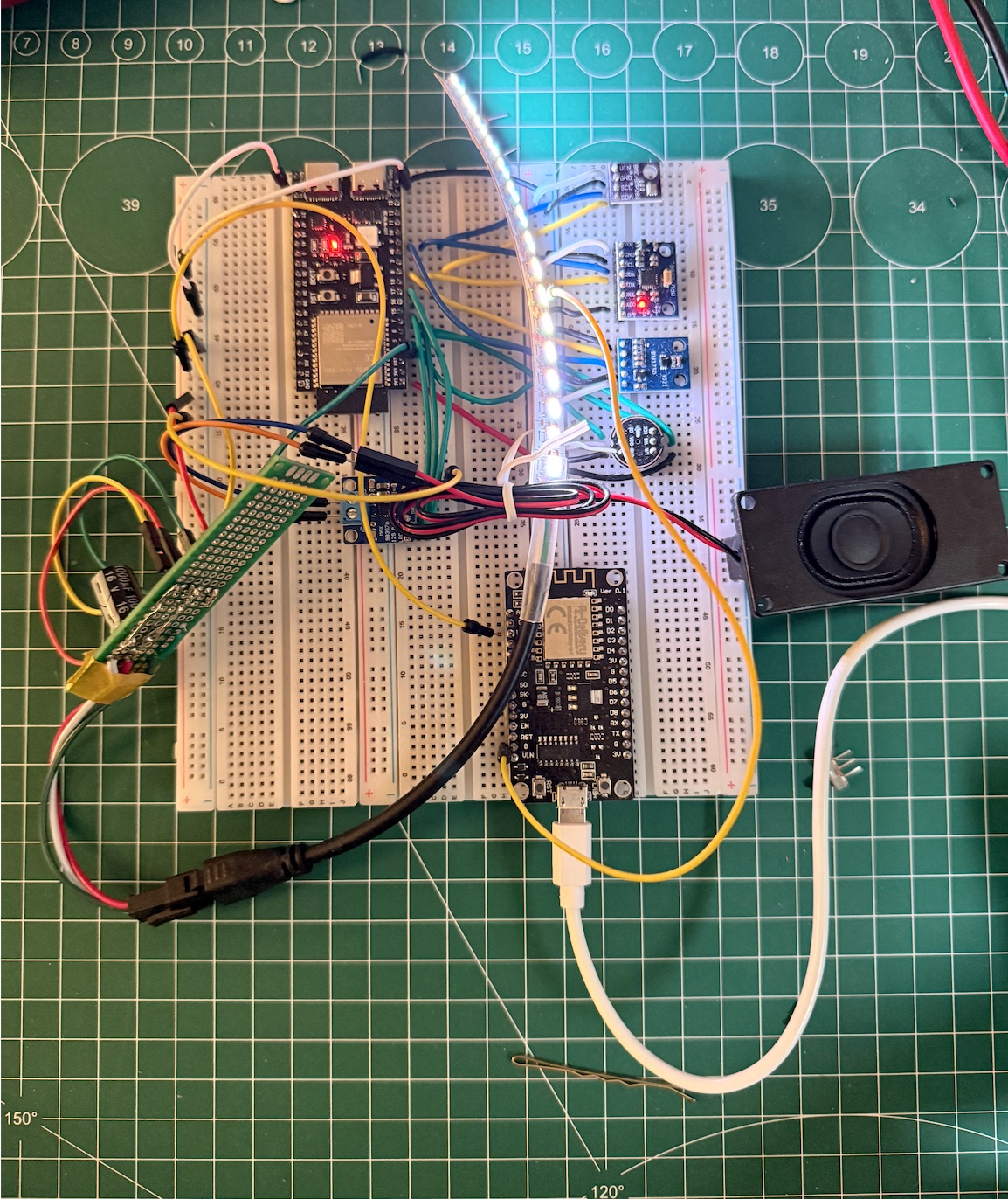
At this stage, the important shift is that the inputs are no longer just being read. They influence the internal state of the system, which in turn changes what it does. Changes in light and sound are especially noticeable. Activity in the environment alters the cells, affects their connections, and changes the behavior of the emitters.
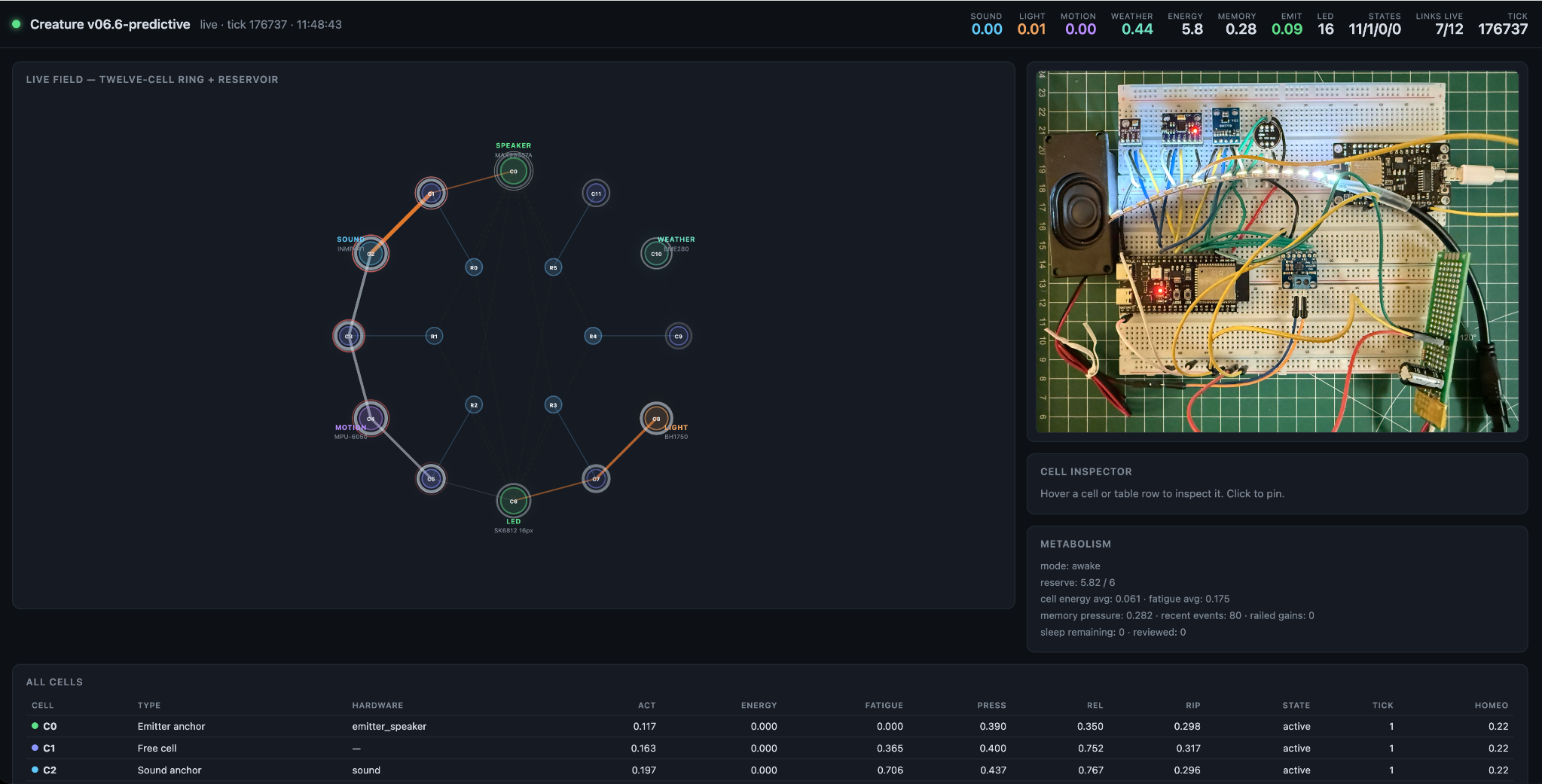
The reservoirs have become an important part of this. Rather than acting as simple storage, they function more like a form of resonance. Repeated or sustained activity accumulates there and feeds back into the network, strengthening some connections while others fade. The system therefore carries traces of what has happened before, even when the original stimulus is gone.
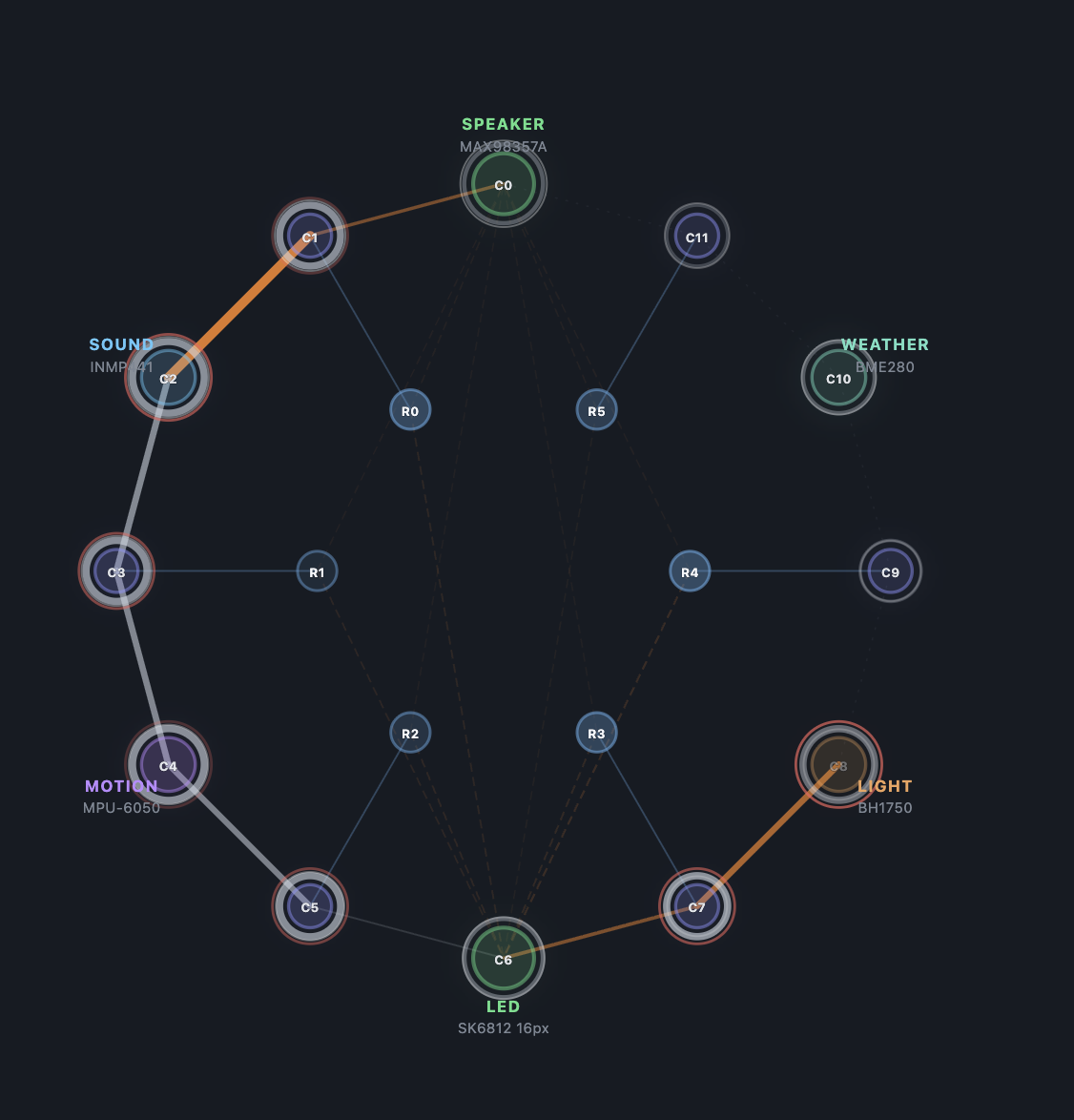
It is still a very small system: twelve cells, a handful of sensors, light and sound output, and a set of simple rules. But it has crossed the point where its behavior feels entirely predetermined. The same environmental input does not necessarily produce exactly the same response because the system arrives at each moment with a different internal state.
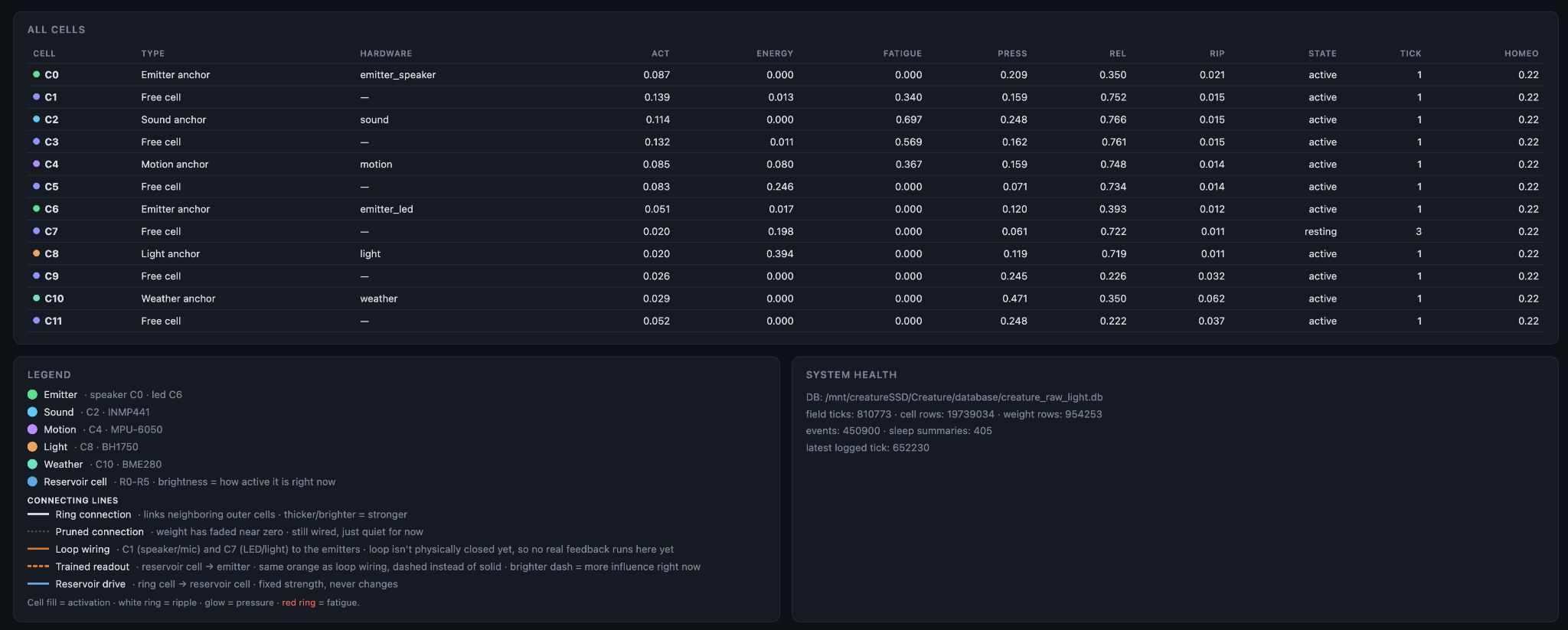
That was the main goal of this first attempt.
Where it goes next is less clear.
I could add more sensors, more cells, more sophisticated learning rules, physical movement, or a more permanent body. But simply increasing the complexity may not make it more interesting. The next step is probably to spend some time observing what is already here, looking for behaviors worth preserving, and understanding which parts of the system are actually producing them.
For now, this feels like the end of the first phase: the Creature can sense, accumulate, change, and respond. What it should become from here is still open.